“Flooding can cause costly damage to a home, and taking preventive steps before the next major storm may help reduce the risk. For eligible homeowners, the City of St. Catharines’ Emergency Flood Alleviation Program (Emergency FLAP) offers financial support for certain flood-protection improvements. With the right assessment and a qualified contractor, homeowners can better understand which upgrades may suit their property and how to navigate the program.”
What The St. Catharines Emergency Flood Alleviation Program (FLAP) offers
The City’s program provides eligible homeowners with a rebate of 90% of approved costs, up to a maximum of $5,000. The program supports specific improvements intended to reduce the risk of sewer backup and related flooding. Eligibility is subject to the City’s requirements, so homeowners should review the official program information before arranging work.
The City’s page says eligible properties must be in St. Catharines, connected to the municipal sanitary sewer system, and be a single-detached, semi-detached, duplex, triplex, or quadplex home built before 2012. Confirm your property’s eligibility directly with the City, as meeting these basic conditions does not necessarily guarantee approval.
Which improvements may qualify?
The City identifies several eligible measures, including:
– Mainline backwater valves
– Sump pits and primary or secondary sump pumps
– Disconnection and redirection of weeping tile
– Discharge piping
– Contractor assessments
– Permit costs
These measures address different potential sources of water entry and sewer-related flooding. A contractor assessment can help identify what your home needs, but the City determines what work and expenses qualify for the rebate.
Apply before starting work
A key part of the process is timing: homeowners must apply online before work begins. The City’s process includes obtaining a contractor assessment and quote, securing a Plumbing-Only permit through the City’s portal, completing the work with a licensed plumber, and passing a final plumbing inspection. After the work is complete, applicants submit final paid invoices as required.
The City states that all work must be completed by January 31, 2028. Since application rules and documentation matter, check the City’s current instructions before committing to a contractor or beginning construction. Starting work before applying could affect your eligibility.
Why Choose Sewer-Man Plumbing and Drain Services
Our professional team of experienced technicians will provide you with a personalized assessment to identify your property’s unique flood risks and recommend the most effective flood prevention strategy tailored to your needs. The FLAP subsidy covers up to 90% of eligible project costs, to a maximum of $5,000 per residential property. The goal is to help homeowners invest in flood protection before the next storm arrives. Because funding applies to eligible work, it’s important that you hire an experienced technician to check the program requirements and confirm which improvements qualify before starting a project.
Why flood prevention matters
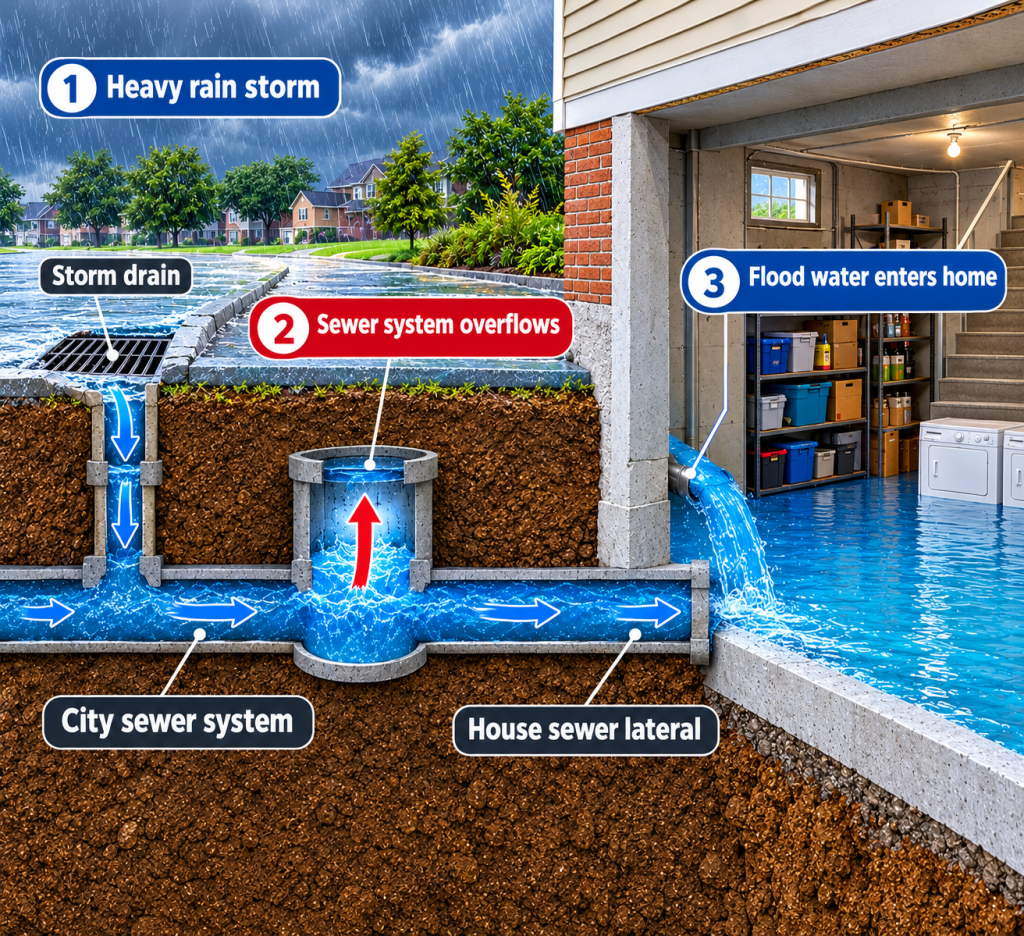
Flood risks are not the same for every home. A property’s age, drainage setup, and sewer connections can all affect how water moves around or into the house. Older homes may have infrastructure that differs from newer systems, and a problem that is not visible during dry weather can become apparent during heavy rain.
Rather than waiting for water to enter the home, homeowners can start by learning where their property may be vulnerable. A professional assessment can help identify risks and suggest practical measures suited to the home. This makes it easier to prioritize improvements and understand how the FLAP subsidy might support eligible work.
Start with a property assessment
Sewer-Man offers a free consultation to assess a property’s flood risks and recommend mitigation strategies. A personalized assessment is useful because there is no single solution that fits every home. The right approach depends on the specific conditions at the property and the type of work needed.
The company also offers inspection and certification for the FLAP subsidy. According to its page, its team can inspect a property to help determine whether it meets the program’s criteria, guide homeowners through the application process, and help them make the most of the available subsidy. Homeowners should confirm the current application steps and eligibility requirements directly before proceeding.
Understanding sewer laterals
One of the services that Sewer-Man secializes in is the severance of combined sewer laterals. In some older homes, a single pipe—known as a combined lateral—carries household sewage as well as groundwater or stormwater away from the property and into the city sewer.
This arrangement can be relevant when evaluating a home’s flood risks. The page identifies combined-lateral severance as a flood-prevention service, but it does not provide detailed technical guidance or confirm that this work is eligible for subsidy in every case. A qualified professional can assess the existing setup and explain whether a change may be appropriate for a particular property.
What the subsidy could mean for homeowners
The advertised support—up to 90% of eligible project costs, capped at $5,000—could reduce the amount a homeowner pays for qualifying improvements. The exact benefit will depend on the approved work and its costs. Sewer-Man’s experienced team of professionals will assist you by verifying what expenses are eligible, whether approval is needed before work begins, and what documentation must be submitted.
It’s also wise to ask how inspections, certification, and contractor work fit into the application process. Getting clear answers before scheduling a project can help avoid surprises and ensure that the work aligns with the program’s requirements.
A practical way to get started
If you’re concerned about flooding, a sensible first step is to book a consultation and discuss your property’s specific risks. You can then ask:
– What flood vulnerabilities were identified?
– Which improvements are recommended, and why?
– Which parts of the proposed work may qualify for FLAP?
– What inspections or certifications are required?
– Should the application be approved before work begins?
– What costs, paperwork, and timelines should you expect?
Keep copies of assessments, quotes, invoices, and any program correspondence. Confirm the latest requirements with the relevant program representatives, since eligibility and application details should be checked before making financial decisions.
Plan ahead, not after a storm
Flood protection is most useful when it’s considered before an emergency. The St. Catharines FLAP subsidy may help eligible homeowners take preventive steps while reducing some of the cost. A property assessment can clarify what risks exist and what measures may be worth considering.
Sewer-Man invites homeowners to contact our team for a free consultation and support with FLAP-related inspection and certification. To learn more about the services and the subsidy described, visit our St. Catharines Emergency Flood Alleviation Program FLAP page. Before beginning work, confirm current program rules, eligibility, and approval requirements.